Quick Picks
- For purists: Salmon Nigiri, Tuna Sashimi, Yellowtail
- For adventurers: Dragon Roll, Volcano Roll, Chef's Special
- Best of both: Start with 3-piece nigiri, then share a signature roll
- Pro tip: Eat nigiri with your fingers — chopsticks are for sashimi
Walk into any Japanese restaurant in New York City and you'll face a delicious dilemma: do you go classic with pristine slices of fish draped over hand-pressed rice, or do you dive into the bold, often beautifully excessive world of signature rolls? It's a question that has quietly divided NYC diners for decades — and it's one worth understanding deeply, because the answer shapes your entire meal.
The Art of Nigiri
Nigiri sushi (握り寿司) is, at its core, a study in restraint. A small mound of seasoned rice — pressed by hand with just the right amount of pressure — topped with a single slice of fish. That's it. No sauce cascade, no tempura crunch, no dramatic presentation. Just two ingredients in perfect balance.
This simplicity is deceptive. A great piece of nigiri requires extraordinary skill at every stage. The rice must be cooked to a precise consistency, seasoned with a carefully calibrated blend of rice vinegar, sugar, and salt, then shaped while still warm. The fish must be impeccably fresh, cut at the exact angle that maximizes texture and flavor. The ratio of rice to fish must feel effortless — too much rice and it overwhelms; too little and the fish has nothing to anchor to.
From Preservation to Perfection: 1,200 Years of Sushi
Sushi's origins are nothing like what you'd expect. The earliest form — narezushi (熟鮓) — was a preservation method from Southeast Asia that arrived in Japan around the 8th century. Fish was packed in rice and salt and left to ferment for months, sometimes years. The rice was discarded; only the fermented fish was eaten. By the Muromachi period (1336–1573), namanare emerged — partially fermented sushi where both fish and rice were consumed. The revolutionary leap came in 1820s Edo (now Tokyo), when street vendor Hanaya Yohei (華屋与兵衛) invented Edomae-zushi — fresh fish placed atop vinegared rice and served immediately. This "fast food" of old Tokyo is the direct ancestor of every piece of nigiri you eat today.
"It takes ten years to learn to make proper sushi rice. The fish is the easy part."
— Jiro Ono, Sukiyabashi Jiro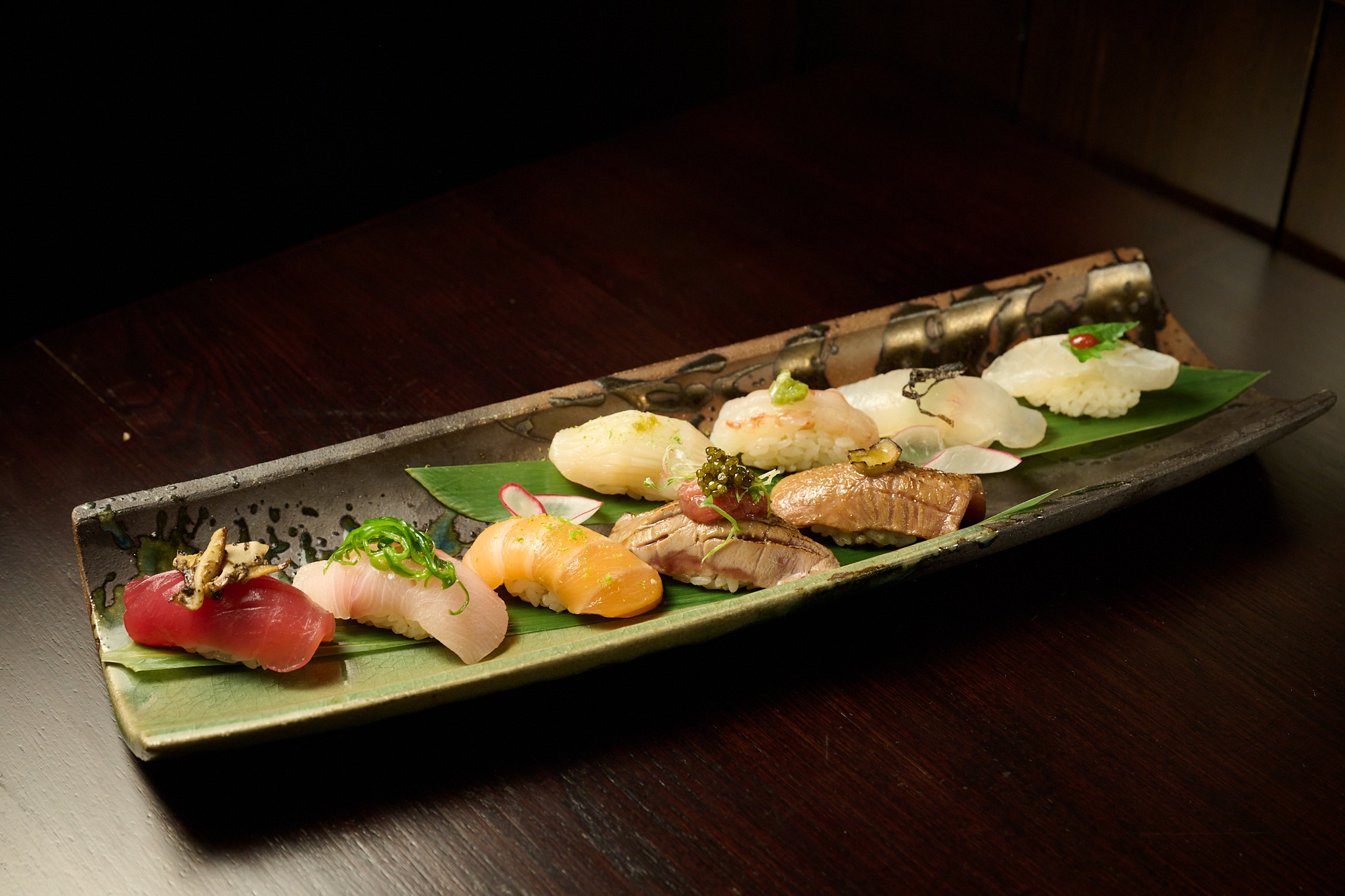
In the hands of a skilled itamae (板前 — sushi chef), nigiri becomes a window into the ocean itself. A piece of hon-maguro (bluefin tuna) reveals layers of flavor that shift as it warms on your tongue. Salmon belly melts with a richness that no sauce could improve. Hirame (flounder) offers a delicate sweetness that whispers rather than shouts.
The Nigiri Essentials
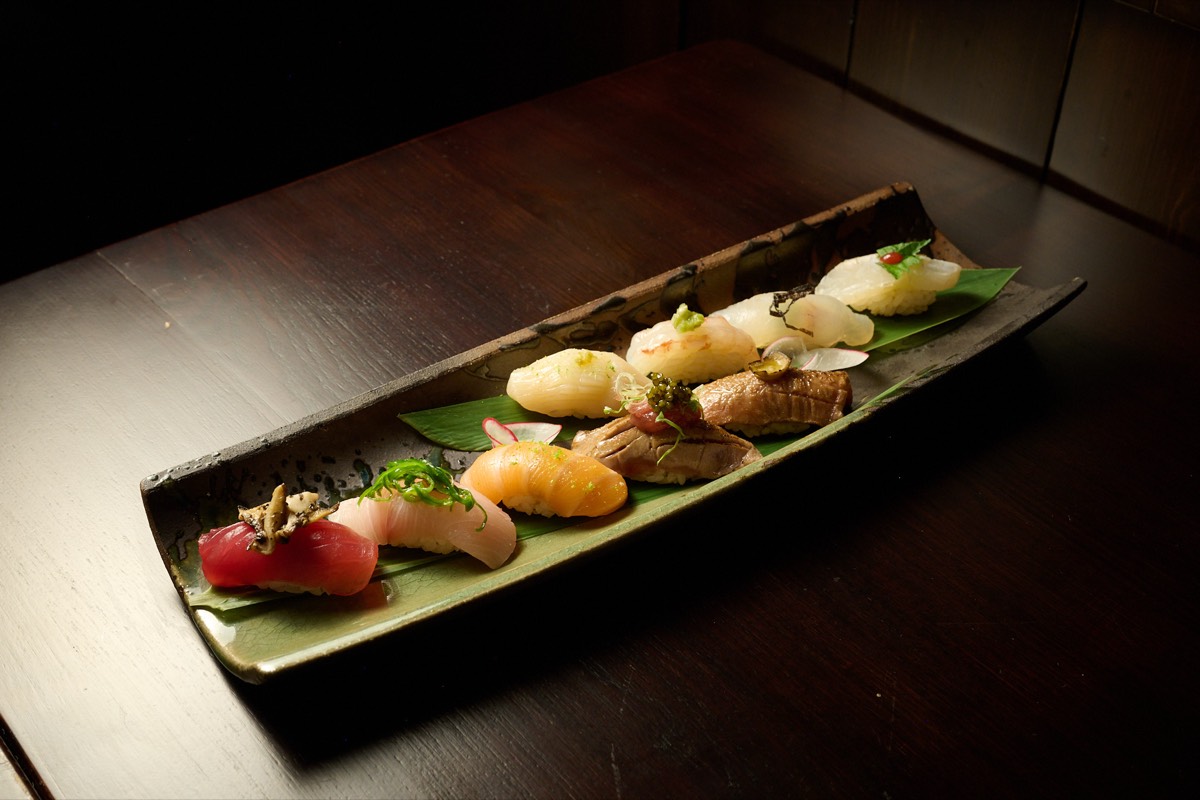
Sake (Salmon): The crowd favorite for good reason. Rich, buttery, and universally appealing. Our salmon comes from sustainable sources and is cut thick enough to appreciate the texture.
Maguro (Tuna): Clean, meaty, and slightly mineral. The benchmark of any sushi counter. If the tuna is good, everything else will follow.
Hamachi (Yellowtail): Buttery with a hint of citrus. Yellowtail sits at the perfect intersection of rich and clean — ideal for diners who want something more nuanced than salmon but less austere than white fish.
Unagi (Freshwater Eel): Glazed with sweet kabayaki sauce and torched to order. This is the bridge between traditionalists and adventurers — warm, sweet, and undeniably satisfying.
The Itamae's Craft
Behind every great piece of nigiri stands the itamae (板前) — the sushi chef. In Japan, becoming a sushi master is a journey measured in decades, not semesters. The traditional apprenticeship follows a rigorous hierarchy: new apprentices spend their first years washing dishes, cleaning fish, and observing. Years three through five might allow them to prepare rice. Only after five to seven years do they begin cutting fish under supervision. The full mastery of Edomae technique — including the preparation of neta (toppings), the art of shari (vinegared rice), and the dozens of hand movements that shape each piece — takes ten years or more.
This commitment produces something remarkable: the ability to assess a fish's quality with a single glance, to adjust the rice vinegar ratio based on humidity, and to press each piece of nigiri with exactly the right amount of force — roughly 300 precisely coordinated hand movements, completed in under five seconds. The rice should hold its shape but dissolve on the tongue. That's not cooking — that's a lifetime of practiced intuition.
The Rise of Signature Rolls
If nigiri is a haiku, a signature roll is a short story — more characters, more plot, more drama. The American signature roll emerged in the 1960s and 70s, when Japanese chefs in Los Angeles and New York began adapting their craft for Western palates. The California Roll — with its inside-out construction hiding the nori seaweed — is often credited as the genesis point, but the evolution since then has been extraordinary.
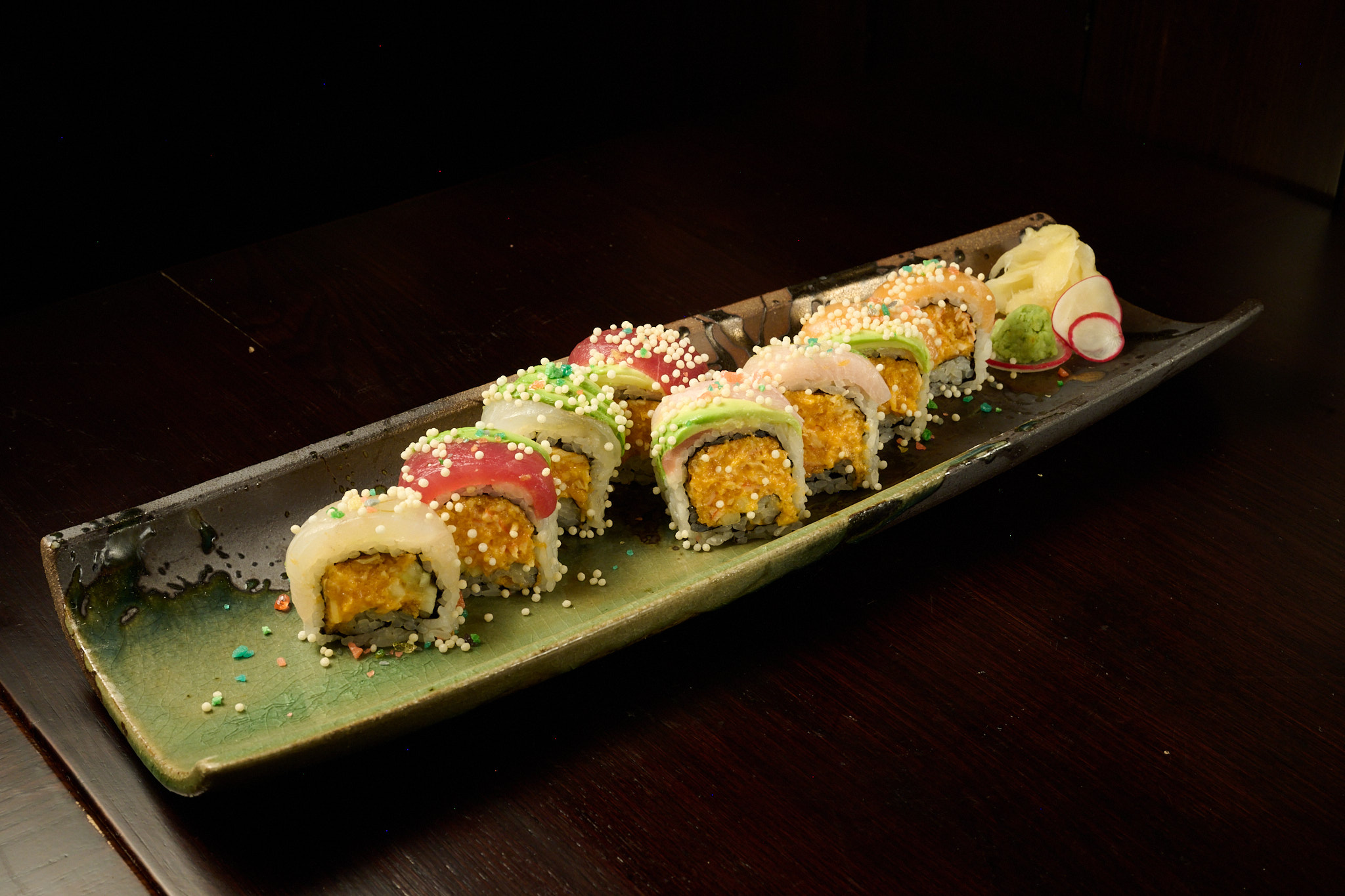
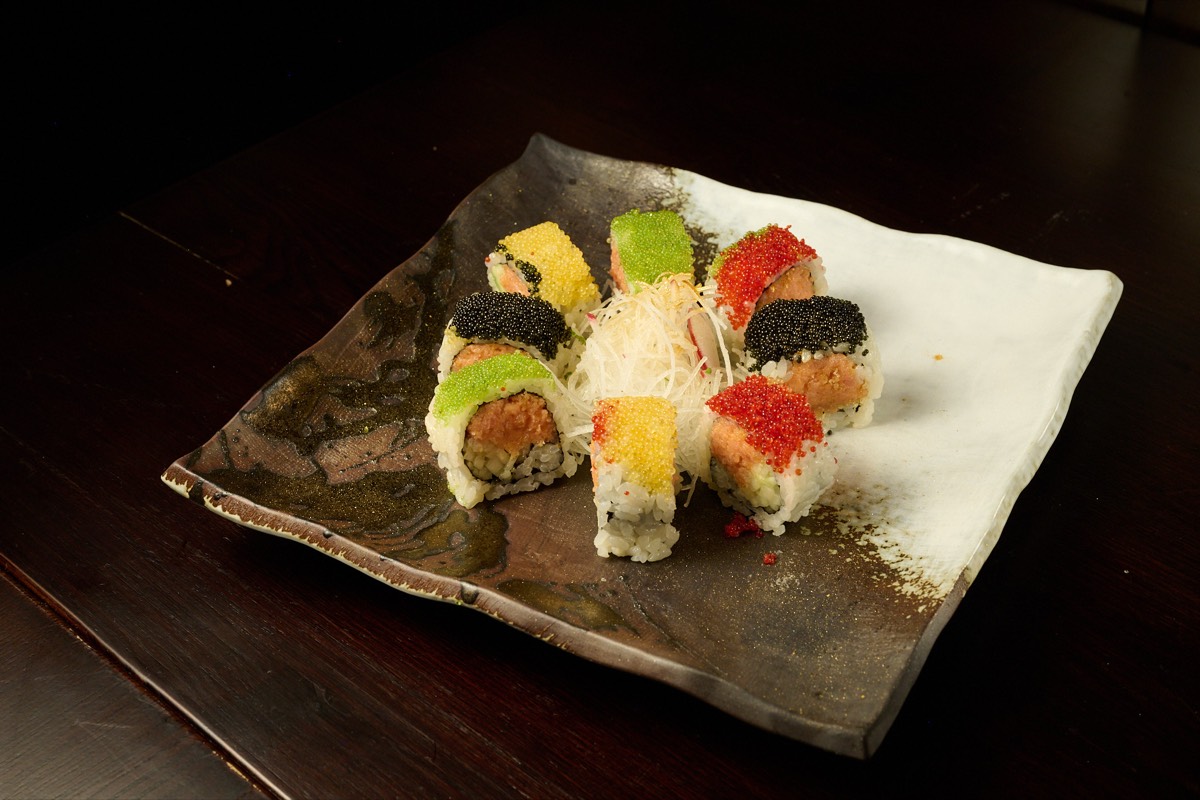
Today's signature rolls are works of culinary architecture. They layer textures (crispy tempura shrimp inside, creamy avocado outside), temperatures (warm eel over cool cucumber), and flavors (spicy mayo meeting sweet mango) in combinations that traditional sushi never attempted. They're often visually stunning — sliced into jewel-like cross-sections that reveal their layered interiors like geological core samples.
Critics sometimes dismiss signature rolls as "not real sushi," but that argument misses the point. Signature rolls are a legitimate branch of Japanese-American cuisine that has produced genuinely delicious food. The creativity, skill, and balance required to build a great roll is its own art form — different from nigiri, but no less valid.
Maki — How Japanese Tradition Met American Creativity
Traditional maki-zushi (巻き寿司) — rice and filling rolled in nori seaweed — has existed in Japan for centuries, but it was always simple: a strip of tuna (tekka-maki) or cucumber (kappa-maki) inside a thin roll. The transformation happened in 1960s Los Angeles, where chef Ichiro Mashita at Tokyo Kaikan reportedly created the California Roll, substituting avocado for toro (fatty tuna) and placing the rice on the outside to hide the nori from seaweed-shy Americans. This uramaki (裏巻き, "inside-out roll") technique opened the floodgates for the creative explosion that followed. Today, the American signature roll is its own culinary art — a hybrid that honors Japanese technique while embracing the bold, more-is-more spirit of American dining.
Signature Rolls Worth Knowing
Dragon Roll: Shrimp tempura inside, avocado draped on top to mimic dragon scales, finished with unagi sauce. This is the roll that converts people who think they don't like sushi.
Spicy Tuna Roll: Diced tuna mixed with spicy mayo and a touch of sesame oil. Simple, punchy, and endlessly craveable. The gateway roll for a generation of sushi lovers.
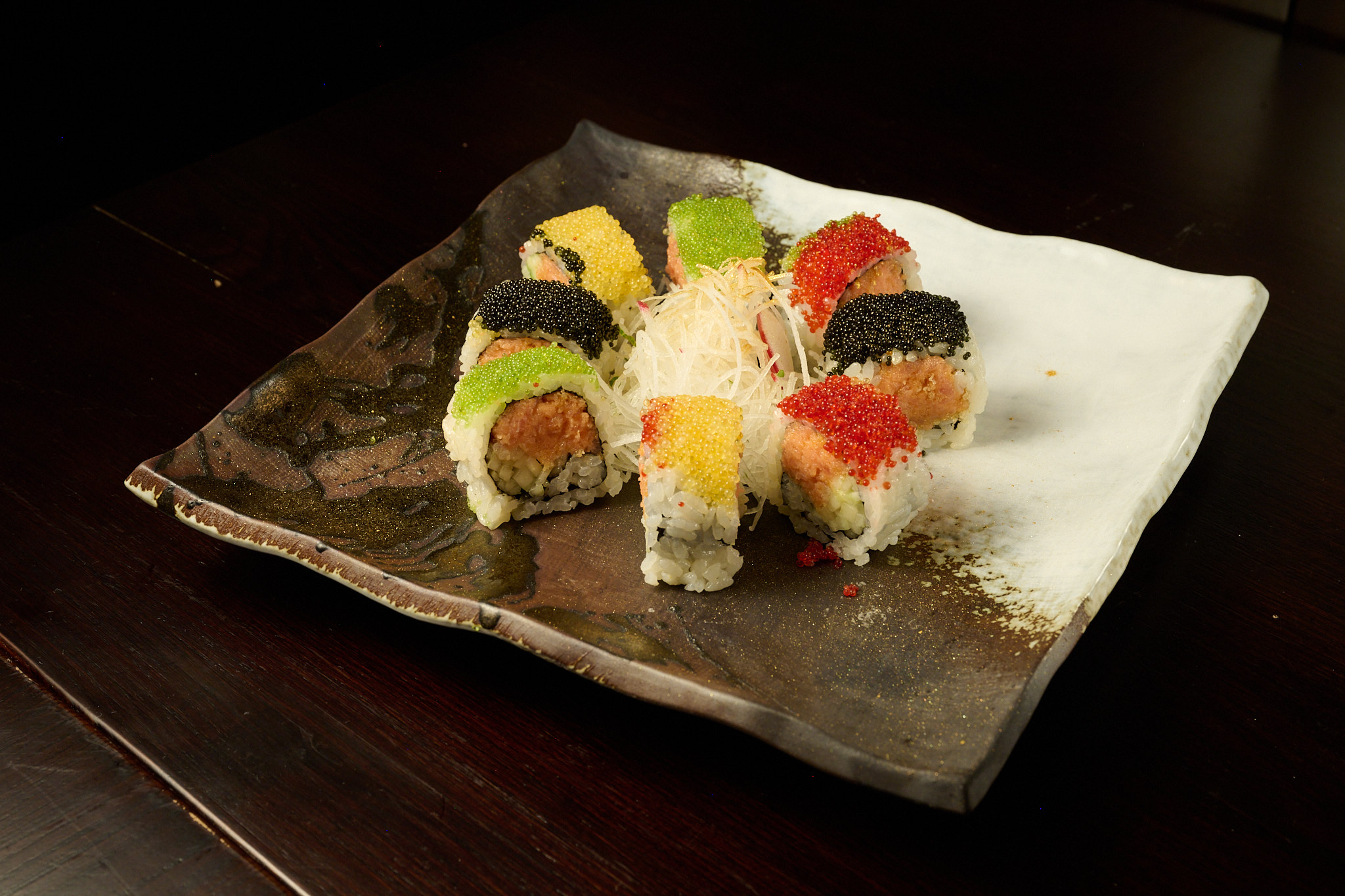
Rainbow Roll: A California Roll crowned with an alternating sequence of different fish — tuna, salmon, yellowtail, shrimp — creating a colorful mosaic. It's as much a feast for the eyes as for the palate.
Volcano Roll: A baked roll with a crown of spicy crab and mayo, broiled until golden and bubbling. Warm, rich, and absolutely indulgent — the comfort food of the sushi world.
Side by Side: A Comparison
| Aspect | Nigiri | Signature Rolls |
|---|---|---|
| Philosophy | Subtraction — remove everything unnecessary | Addition — layer flavors and textures |
| Fish quality | Must be exceptional (no hiding flaws) | Important, but complemented by other elements |
| Soy sauce | A light dip, fish-side down | Often unnecessary — sauces are built in |
| Eat with | Fingers (traditional) or chopsticks | Chopsticks or by hand |
| Best for | Tasting the fish, appreciating craft | Sharing, variety, satisfying cravings |
| Sake pairing | Light Junmai or Ginjo | Fruity Ginjo or Japanese beer |
When to Order What
The honest answer? Both. A great sushi meal in NYC doesn't force you to choose sides. But context matters, and knowing when each style shines will make you a more confident — and more satisfied — diner.
Choose nigiri when:
- You want to taste exceptional fish at its purest
- You're sitting at the sushi bar and want to engage with the chef
- You're pairing with premium sake and want clean flavors
- You're dining alone or with one other person (nigiri portions are individual)
- You want a lighter meal that highlights quality over quantity
Choose signature rolls when:
- You're dining with a group and want to share
- You're craving bold flavors, textures, and visual drama
- You're introducing someone to sushi for the first time
- You want something more substantial alongside drinks
- You're in the mood for creativity and surprise
Key Takeaways
- Nigiri is about purity — two ingredients in perfect balance
- Signature rolls are about creativity — layered flavors and bold combinations
- Neither is "better" — they serve different moods and occasions
- The best strategy is to order both: start with nigiri, then share rolls
- At the sushi bar, trust the chef — ask what's freshest today
The Showa Era Approach
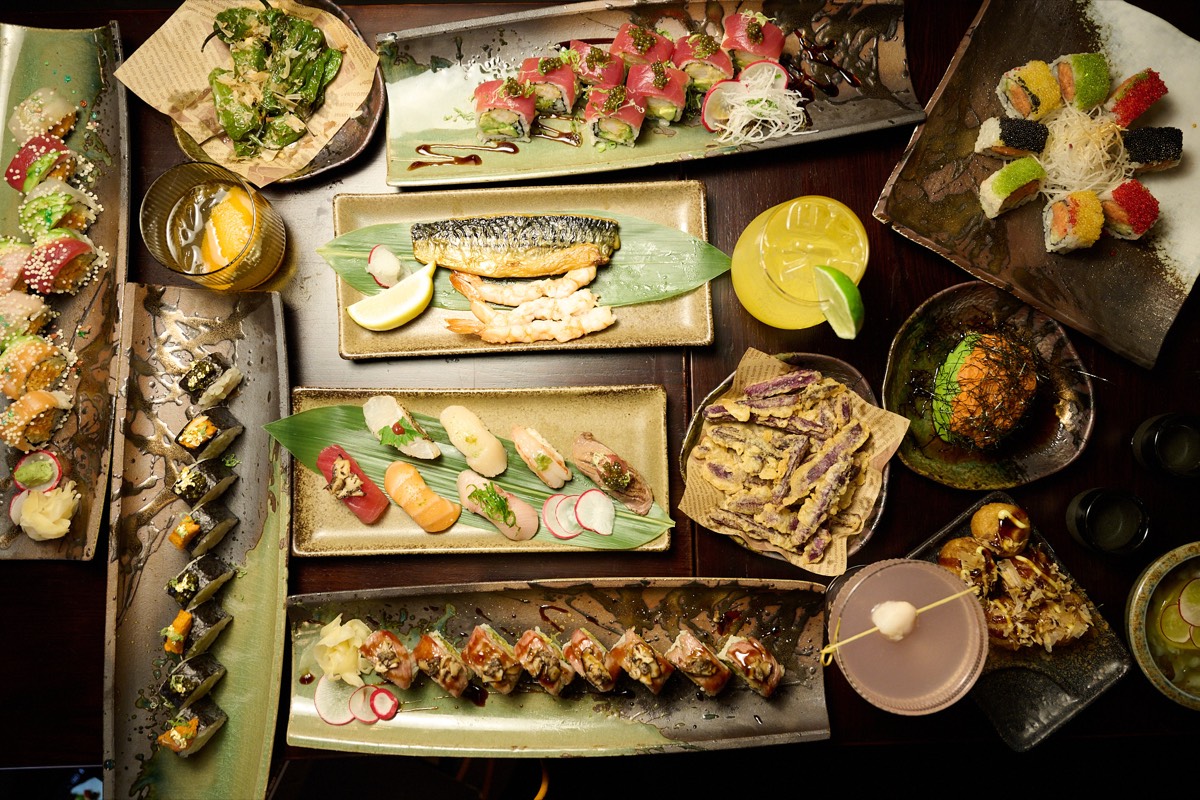
At Showa Era Izakaya, we believe you shouldn't have to choose. Our sushi menu honors both traditions because both deserve a place at the table. Our nigiri is pressed by hand using techniques rooted in Edomae tradition — the Tokyo-born style that emphasizes precision and restraint. Our signature rolls are crafted with the same quality fish but allow our chefs to express their creativity.
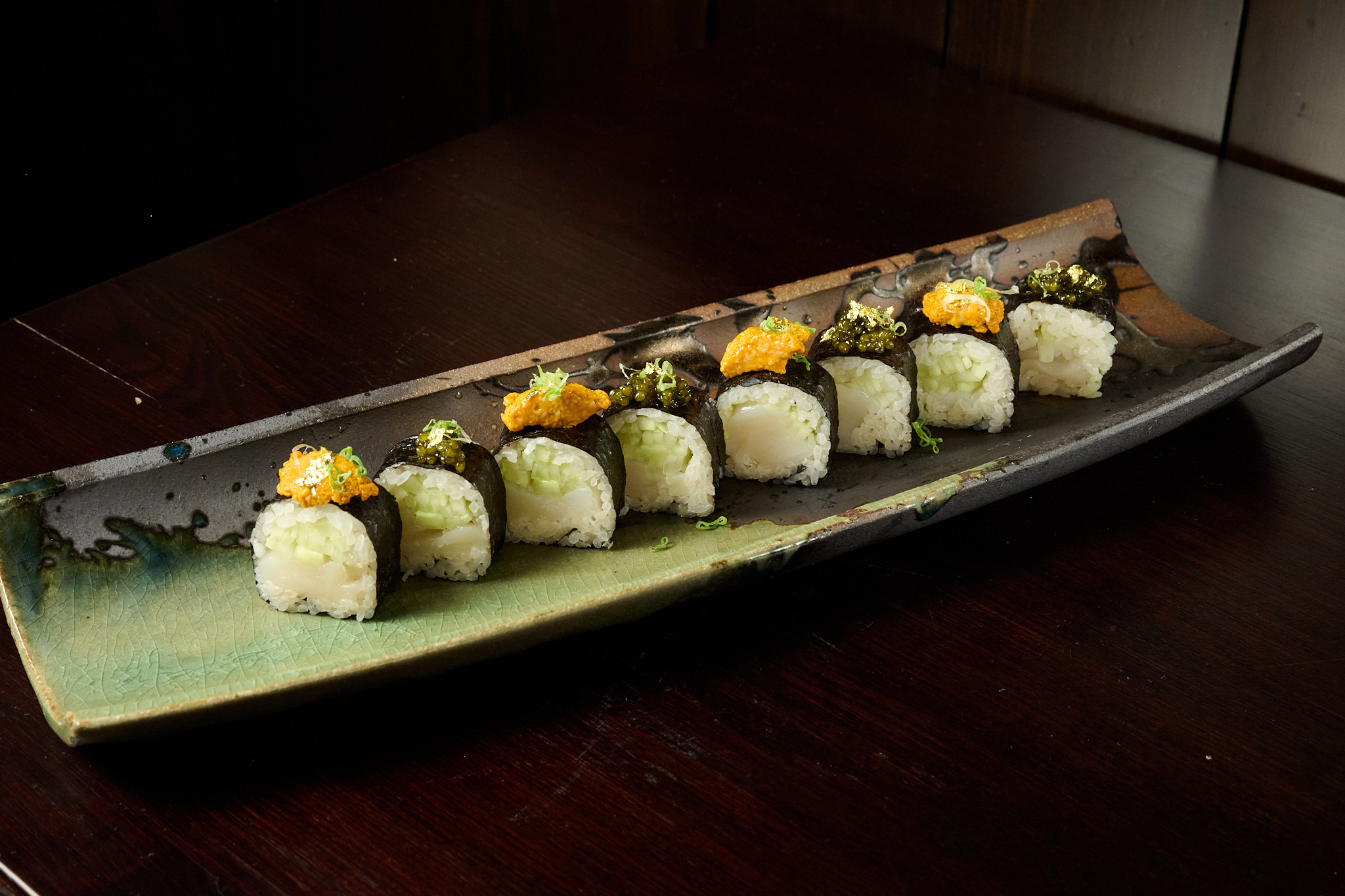
What makes our approach different is that we never compromise the fish for the sake of spectacle. Every signature roll starts with the same premium-grade seafood that goes into our nigiri. The spicy tuna in our Volcano Roll is the same tuna you'd get as nigiri — we just present it differently. This philosophy means that whether you're a purist or an adventurer, you're getting the best we have.
Local Tips
- Sit at the bar counter to watch our chefs press nigiri — it's a performance worth seeing
- Ask about daily specials — the freshest fish changes with the market
- Start with the Sushi & Sashimi Combo if you want a curated tasting experience
- Pair nigiri with Junmai sake and signature rolls with a cold Sapporo for the best experience
Your Ordering Strategy
Here's the approach we recommend for first-timers and regulars alike: begin with nigiri. Choose two or three pieces of fish that interest you. Eat them slowly, with minimal soy sauce, and let the quality of the fish set the tone for the meal. This is your palate calibration — a reminder of what clean, unadorned sushi can be.
Then pivot to rolls. Choose one signature roll to share — something with texture contrasts and built-in sauce. The Dragon Roll is a masterful choice, or ask your server what the chef recommends tonight. This course is social, shareable, and satisfying in a completely different way.
If you're still hungry, circle back to one more piece of nigiri — maybe something you haven't tried before. Unagi is a beautiful closer: warm, sweet, and deeply comforting. Or finish with a piece of tamago (Japanese egg omelet), which traditionally signals the end of a sushi meal in Japan.
However you choose to navigate the menu, remember this: the best sushi meal isn't about picking a side. It's about embracing the full spectrum of what Japanese cuisine can offer — from the austere beauty of a single slice of fish to the exuberant joy of a roll that was clearly built to make you smile.
Experience Our Sushi Menu
Fri–Sun 10AM–2AM
Frequently Asked Questions
Should I use soy sauce with nigiri?
Lightly. Dip the fish side (not the rice side) briefly into soy sauce. Some nigiri comes pre-seasoned with a brush of nikiri sauce — in that case, skip the soy entirely. When in doubt, take a small first bite without sauce to taste the fish.
Is it okay to eat nigiri with my fingers?
Not just okay — it's traditional. In high-end sushi restaurants in Japan, eating nigiri with your fingers is standard practice. The warmth of your hand actually helps release the aroma of the fish. Chopsticks work fine too, but don't let anyone tell you fingers are wrong.
What's the difference between sushi and sashimi?
Sushi always includes rice — the word "sushi" actually refers to the vinegared rice, not the fish. Sashimi is sliced raw fish served without rice. Nigiri is a specific type of sushi where fish sits atop a pressed rice mound. Rolls (maki) are another type of sushi with rice and fillings wrapped in nori.
What if I don't eat raw fish?
No problem. Our menu includes cooked options like unagi (eel), shrimp tempura rolls, and the Volcano Roll (baked). We also have vegetable rolls and tamago (sweet egg) nigiri. Great sushi isn't exclusively about raw fish.
Ready to Taste the Difference?
Our sushi counter is waiting. Whether you come for the nigiri, the rolls, or both — we'll make it unforgettable.